
Let me tell you what happened this week so you can watch the next part clearly.
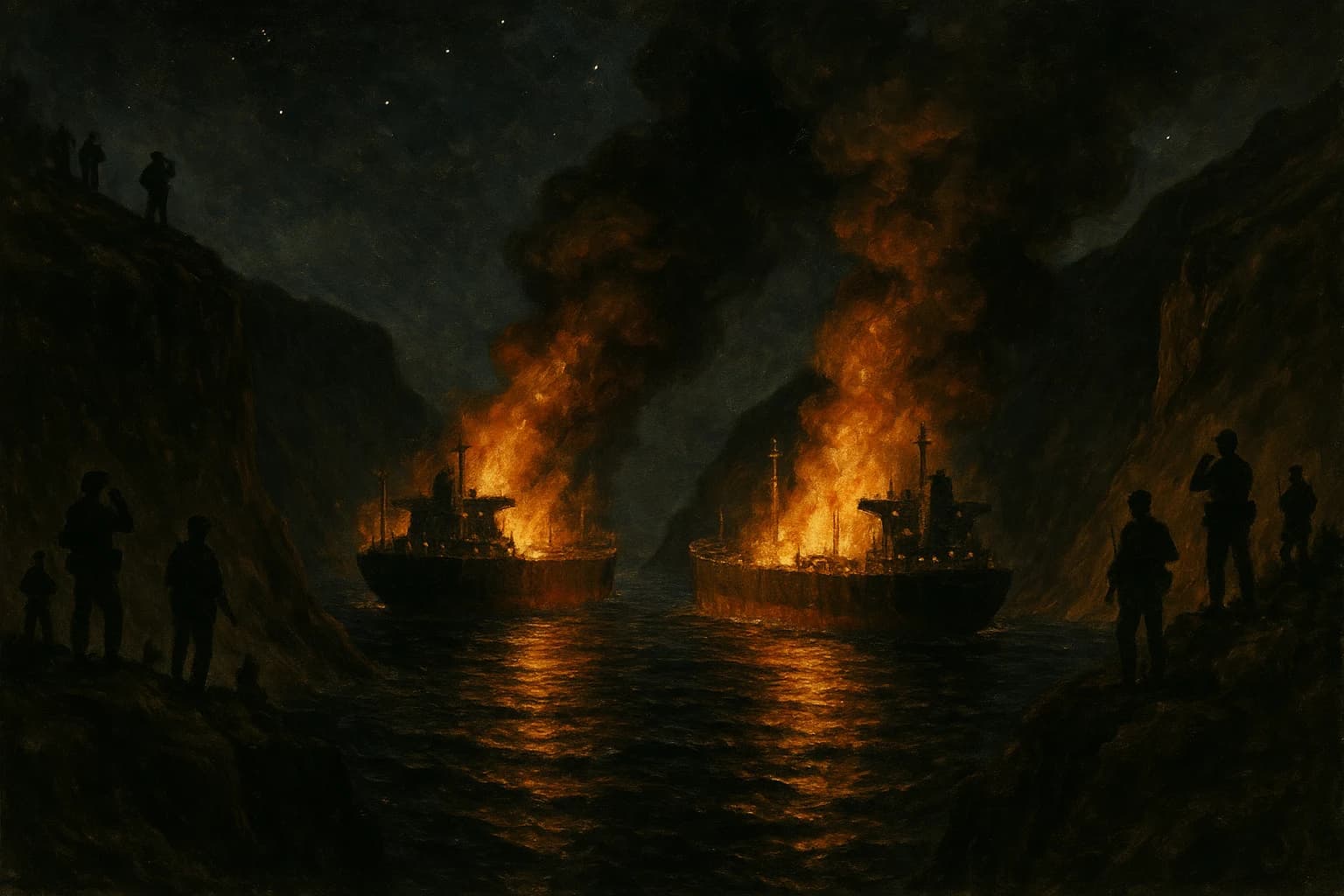
Iran struck three tankers in the Strait of Hormuz on Tuesday — including a Qatari vessel, from the country that had been mediating the peace talks. The United States retaliated Wednesday with strikes on Iranian weapons sites, air defenses, and coastal surveillance installations. Explosions in Qeshm, Sirik, Bandar Abbas. Then sanctions reimposed. Then Iran's foreign ministry issued a statement accusing Washington of violating the memorandum of understanding both sides signed last month.
This happened while millions of Iranians were in the streets of Tehran for day four of Ali Khamenei's funeral.
Read that again. The country's supreme leader is being buried. The country has no clear successor. And both sides found the moment to restart the shooting.
What the peaceful way out looked like
There was one. A ceasefire came into effect in April. In June, both sides signed an MOU — a memorandum of understanding — starting 60 days of negotiations on Iran's nuclear program and a path to permanent peace. The US suspended oil sanctions as a gesture of good faith. Qatar was in the room as mediator.
The MOU's language was vague. Both sides interpreted it differently. Iran believed it controlled the reopening of the strait and could charge ships for passage. The US believed it could open alternative shipping corridors near Oman. Iran hit the tankers partly because Oman proposed a new route Iran opposed — the strait is an economic control point, and Iran was asserting that control.
The US used the tanker strikes to reimpose oil sanctions Tuesday. Then hit Iranian military targets Wednesday. Iran called both moves violations of the MOU.
Experts said the vague wording was always a ticking clock. It turns out it was a 30-day clock.
The playbook from here
We all know Uncle Sam's Playbook. It isn't classified.
Strike the military assets. Reimpose the economic pressure. Let the leadership vacuum — and Khamenei's death has created a real one — run its course through faction fights and internal chaos. Negotiate with whoever emerges as most useful. Call it a transition to stability.
We protested this. We lobbied for peace. We signed the petitions and said the right things in the right rooms. And underneath all of that — and I won't exempt myself — many of us were watching with something that wasn't entirely horror. We wanted to know what happened when the restraint ran out. We hoped, quietly, that someone else would make the decision we couldn't quite say out loud. We were, if we're honest, a little bloodthirsty.
The war machine has always known this. It counts on it.
The development pitch is never far behind the missile strike. The rest of the prospectus writes itself. It has, in fact, been written.
Whether this was avoidable
Maybe. The MOU existed. The 60-day window existed. Qatar was a willing mediator. Iran striking a Qatari tanker during Khamenei's funeral — during the negotiations Qatar was hosting — is either a catastrophic miscalculation by hardliners trying to derail peace, or evidence that the faction that wanted peace was never actually in control of the Strait.
Either way: the MOU is in tatters. The sanctions are back. The strikes happened. The window that existed for about thirty days is closed.
We said the die was cast when Iran first hit the tankers. What we didn't know then: the ceasefire had already been violated multiple times by both sides before that. The die had been cast earlier than we thought.
Nobody profits from peace — not the defense contractors, not the reconstruction firms, not the oil companies waiting on the sanctions to lift permanently in their favor rather than Iran's. The incentive structure was always going to make the narrow path difficult.
There might have been a peaceful way out. Here we are anyway.
For the investment opportunities that follow, see Little America, Iran: A Development Prospectus.
— J.P. Howlett
Sources
- Iran accuses US of violating peace agreement after strikes target sites around strait of Hormuz — The Guardian, July 8, 2026
- US launches strikes against Iran after attacks on vessels in strait of Hormuz — The Guardian, July 7, 2026
- Tehran teemed with Khamenei mourners, but divisions — and demands for change — remain — The Guardian, July 7, 2026