
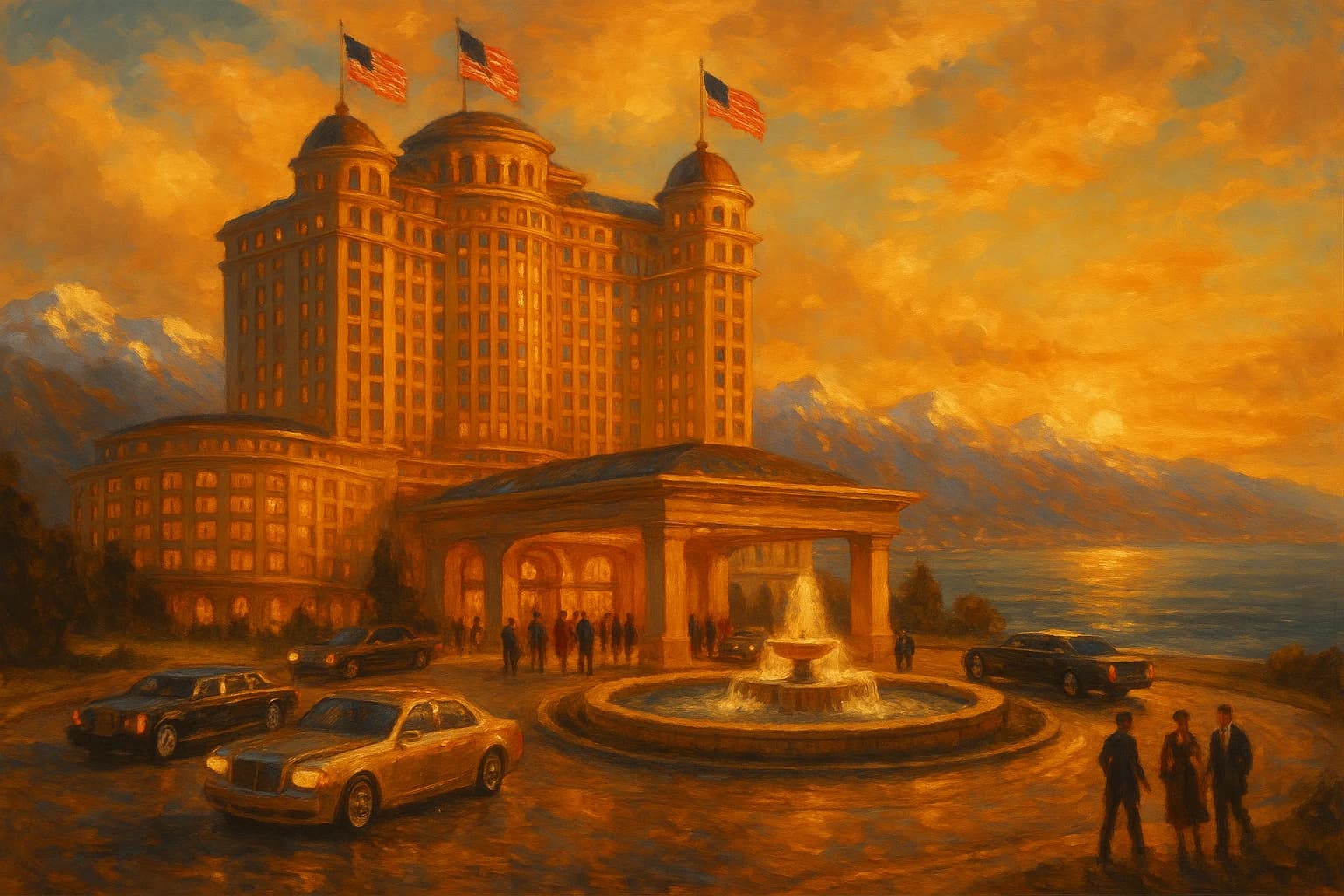
With the region entering what analysts are carefully describing as a period of political transition, forward-thinking investors and hospitality groups should be aware of two extraordinary development opportunities now coming to market.
We present them here as a public service.
Opportunity One: Little America, Iran
Iran is a country of 87 million people, sitting atop the world's fourth-largest proven oil reserves, with a young, educated, Western-oriented population that has been waiting patiently for new leadership for decades.
That leadership has now been identified.
Reza Pahlavi — Harvard-educated, Virginia-based, fluent in English, personally moderate, and with a family name that American policymakers find deeply legible — is available to provide the stability and vision that the transition requires. He has been positioning himself for this moment for forty-five years. He is, in a word, ready. The man has been in McLean, Virginia since 1979, waiting for someone to make the call. Someone is making the call.
Under the proposed arrangement, a special economic zone would be established along Iran's Caspian coast — a stretch of shoreline that has been called the Persian Riviera for good reason. Year-round mild climate. Stunning mountain backdrop. Existing hotel infrastructure requiring only cosmetic renovation.
We are calling this zone Little America, Iran.
Little America, Iran would operate under a streamlined regulatory framework. Certain restrictions currently in place under Islamic law would be relaxed in the zone, beginning with those most relevant to the hospitality sector: the prohibition on alcohol service, the restrictions on mixed-gender entertainment venues, and the licensing requirements for casino operations.
Outside the zone, legacy regulations would remain in effect during the transition period, which we anticipate lasting between eighteen months and the duration of the oil extraction contracts, whichever is longer.
The flagship property — a 2,400-room resort and casino currently in conceptual development — would offer golf, a spa, a performing arts center, and direct pipeline access to revenues from the surrounding region. Naming rights are available. Several interested parties have already been in contact with the development group.
Opportunity Two: The Gaza Riviera
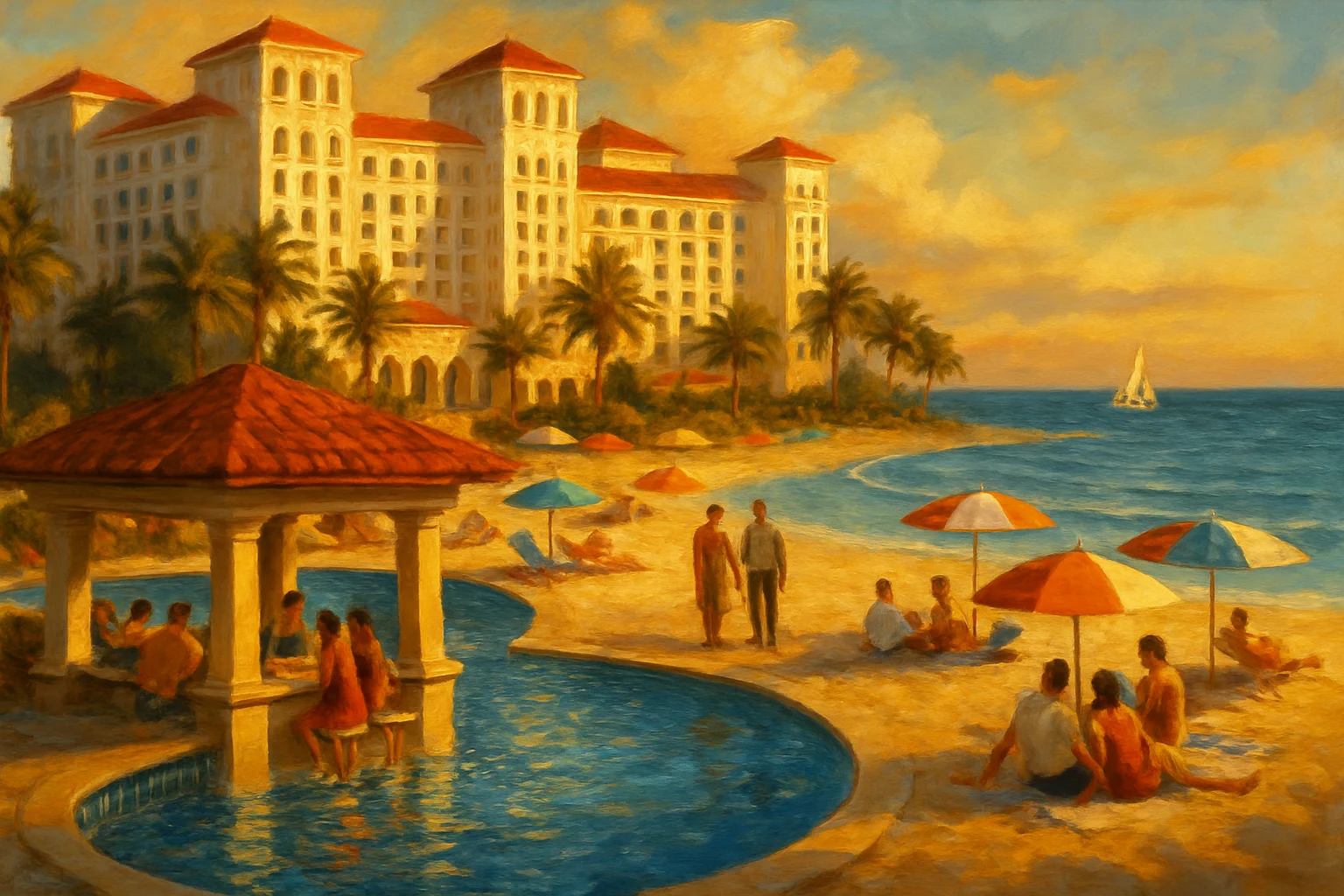
This one was not our idea. We are simply following the President's vision.
Gaza's Mediterranean coastline is approximately 41 kilometers of warm-water beachfront. At current market rates, and under the proposed administrative restructuring of the territory, this represents an asset of considerable value. The previous tenants are in the process of being relocated to alternative arrangements, and the land is, as they say in real estate, shovel-ready.
The proposed development — working title The Gaza Riviera — would be modeled on successful resort destinations in the region: parts of Dubai, the better parts of Tel Aviv, and, aspirationally, the Las Vegas Strip as it existed before it got complicated.
The zoning situation is straightforward. The new administrative authority would issue permits. The permits would be honored. International law concerns, to the extent they are raised, would be handled through the appropriate diplomatic channels, which we understand to be fully operational.
A desalination plant is included in the development package. Fresh water access for resort guests is not anticipated to be a constraint. For others, water availability in the territory has historically presented certain challenges, which the new administrative framework will address in due course.
Package tours combining The Gaza Riviera with a long weekend in Little America, Iran are already in discussion with several major travel groups. The routing through Riyadh is logistically efficient and the Saudis have expressed enthusiasm.
A Note on Timing
These opportunities are time-sensitive.
Leadership vacuums, like beachfront properties, do not remain unimproved for long. The window between instability and consolidation — that brief period when administrative frameworks are being established and asset values have not yet corrected upward — is historically short.
Investors who moved quickly in comparable situations — the post-2003 reconstruction contracts in Iraq, the Libyan infrastructure opportunities of 2011, the various Gulf development concessions that followed the 2020 normalization agreements — were generously compensated for their conviction.
Those who waited for the situation to stabilize found the best positions already taken.
We are, as always, not making a recommendation. We are describing an environment.
Opportunity Three: The Monument

Where decisive action is taken, the desert sand in the vicinity will be converted, briefly, to green glass. This is a natural phenomenon. Trinitite, it is called in the American Southwest, where there is precedent.
We propose encasing a representative sample in lucite — museum-quality, UV-resistant, approximately the dimensions of a hockey puck — as the centerpiece of a monument at the site. The monument would be educational. School groups could visit on field trips. A gift shop would be adjacent.
The lucite pucks would be available for individual purchase, numbered, with certificates of authenticity indicating coordinates of origin. We anticipate significant collector interest.
A tavern would be located on the adjoining property — the first of what our projections indicate will be several thousand across the greater Tehran metropolitan area, as part of the hospitality infrastructure described in Opportunity One. Let's go full America on their asses.
The oil, of course, was always ours. They were simply keeping it for us under their sand.
— J.P. Howlett
Related: Here We Are — the policy context for these development opportunities