

The merchant filled out the application. Provided the bank statements. Walked the underwriter through the business. Waited.
The answer was no.
No explanation. No "here's what would need to change." Just: declined. The merchant now knows two things — that they need capital and that they can't get it. Everything else was noise.
I spent four months at an ISO. I put plenty of merchants through underwriting. I closed two deals.
It wasn't a problem with my ability to sell. It was a problem with the company's ability to fulfill.
The merchants were real. The need was real. The funders just weren't moving. And when funders aren't moving, ISOs can't close, merchants can't get funded, and the whole chain stands around watching the money not flow.
The Numbers Behind the Feeling
This isn't anecdote. The Fed's own data confirms it.
Full approval rates for small business loans have dropped 21 percentage points since 2019. In 2019, 62% of applicants got what they asked for. Today that number is around 41%. The gap is being papered over by non-bank lenders and fintech platforms — which means the merchants who can't get bank money are paying more for the alternative.
Banks are tightening commercial lending standards for small firms. The Fed's Senior Loan Officer Opinion Survey confirmed it through Q1 2026. Ask the banks why and 83% give you the same answer: economic uncertainty. They won't define that. They just close the door and use the phrase as a placeholder.
The MCA market is getting squeezed from both sides. The New York AG landed a billion-plus judgment against Yellowstone Capital for predatory practices. Disclosure laws are spreading state by state. The funders who survived that pressure got more selective. The ones who didn't got shut down.

Meanwhile: GDP up 2.1% in Q1. Unemployment at 4.2% in June. You'd think things were fine.
They are fine — for people with established credit and access to institutional capital. For the small business owner, the headline economy and the lived economy aren't running at the same speed.
The Ceasefire Is Over
Then oil re-spiked.
Trump declared the Iran ceasefire over at the NATO summit July 8. Three vessels attacked near Hormuz. West Texas Intermediate jumped 4.4% in a day; Brent jumped 5.2%. Whatever relief lower oil prices had started to provide — lower input costs, less inflationary pressure — reversed inside 24 hours.
Some FOMC officials were already signaling they wanted to raise rates before that. Now they have more reason.
Warsh Turns Off the Lights
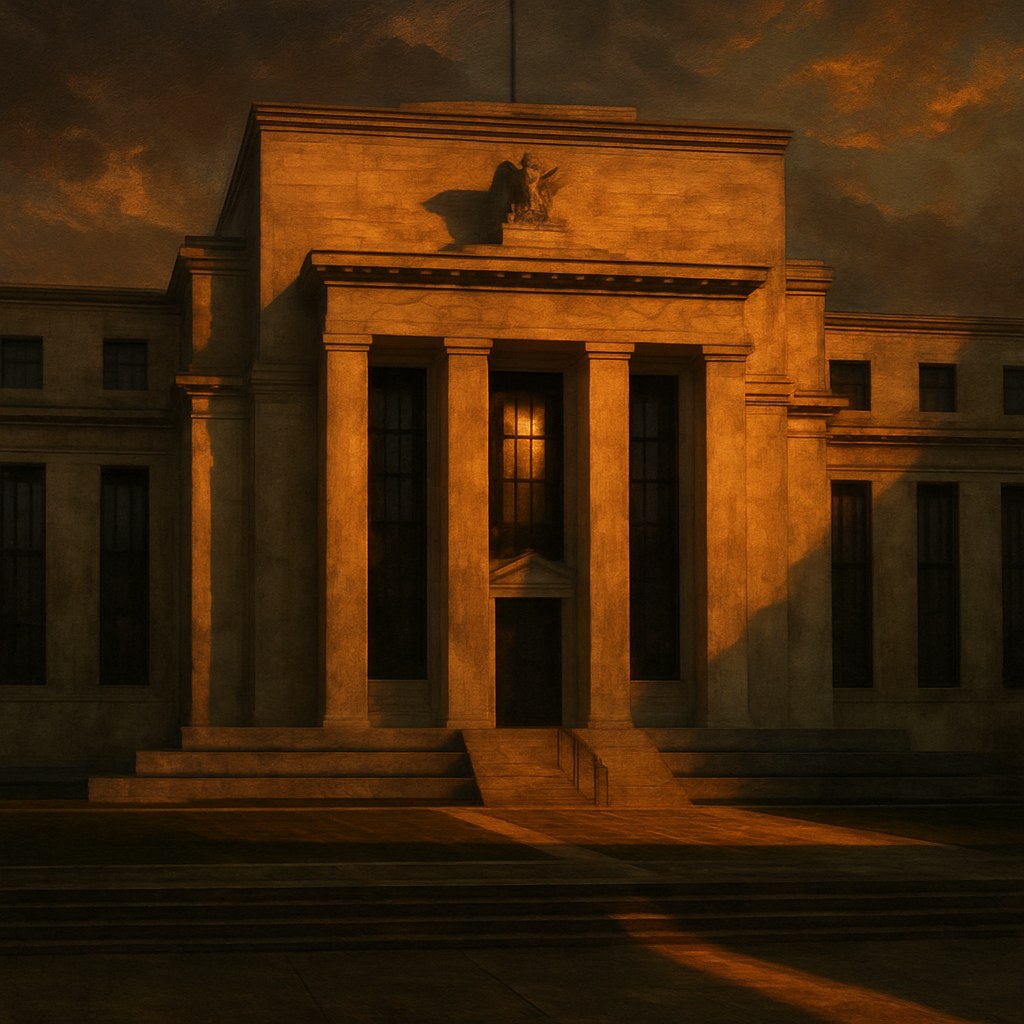
Kevin Warsh released his first Federal Reserve meeting minutes this week. They're skeletal. Some officials want higher rates. That's it.
The Powell-era Fed was a prisoner of its own forward guidance — markets front-ran every signal, and the Fed spent years fighting that. There's a real argument for what Warsh is doing. If you're a bond trader or a quant fund, maybe genuine uncertainty forces you back to doing actual fundamental analysis. Maybe that's the right call.
That argument doesn't reach the merchant trying to decide whether to apply for capital now or wait six months.
The Fed always makes its decisions behind closed doors. The minutes were never the full picture. But they were a window — thin glass, but glass. You could see shapes through it. Now the glass is gone.
The Design
Monetary policy is made by unelected officials in private. Bank lending standards are set by credit committees you'll never meet. The MCA funder won't tell you why they passed. The ISO that put you through underwriting might not know either.
Every layer knows more than the layer below it. The information flows up — never down. The decisions arrive as outcomes: declined, approved, higher rate, shorter term. The reasoning stays in the room.
That's not a malfunction. The asymmetry is a feature.
The merchant who got declined this quarter deserves to know why. Whether it's their industry, their debt-to-income, their revenue seasonality, or a credit committee that quietly decided their sector is temporarily off the menu — that information exists. Someone has it.
They just aren't talking.
— J.P. Howlett
Related:
- How to Sell MCAs and Still Sleep at Night — what the funder relationship actually looks like from inside the ISO
- The Canary in the Credit Mine — why small business feels the crunch before the headlines do
Sources
- At Warsh's First Fed Meeting, Some Officials Signaled Support for Raising Interest Rates — NYT
- The April 2026 Senior Loan Officer Opinion Survey on Bank Lending Practices — Federal Reserve
- Fed Survey: Lending Standards Tightened for Commercial Loans in Q4 — ABA Banking Journal
- Oil Surges as US Strikes Iran, Reversing Return to Pre-War Prices — Al Jazeera
- U.S. Markets Retreat, Oil Prices Jump More Than 5% After Trump Says Ceasefire With Iran Is 'Over' — Spectrum News
- Small Business Loan Approval Rate Statistics — Crestmont Capital
- 2026 Report on Employer Firms: Findings from the 2025 Small Business Credit Survey — Federal Reserve Small Business Credit Survey