
In the spring of 2009, at the absolute nadir of the worst economic crisis in eighty years, a curious phenomenon was visible in the wreckage of the stock market. Consumer discretionary stocks had been devastated. Luxury goods companies were in freefall. Financial stocks had been partially nationalized or destroyed. Housing was rubble.
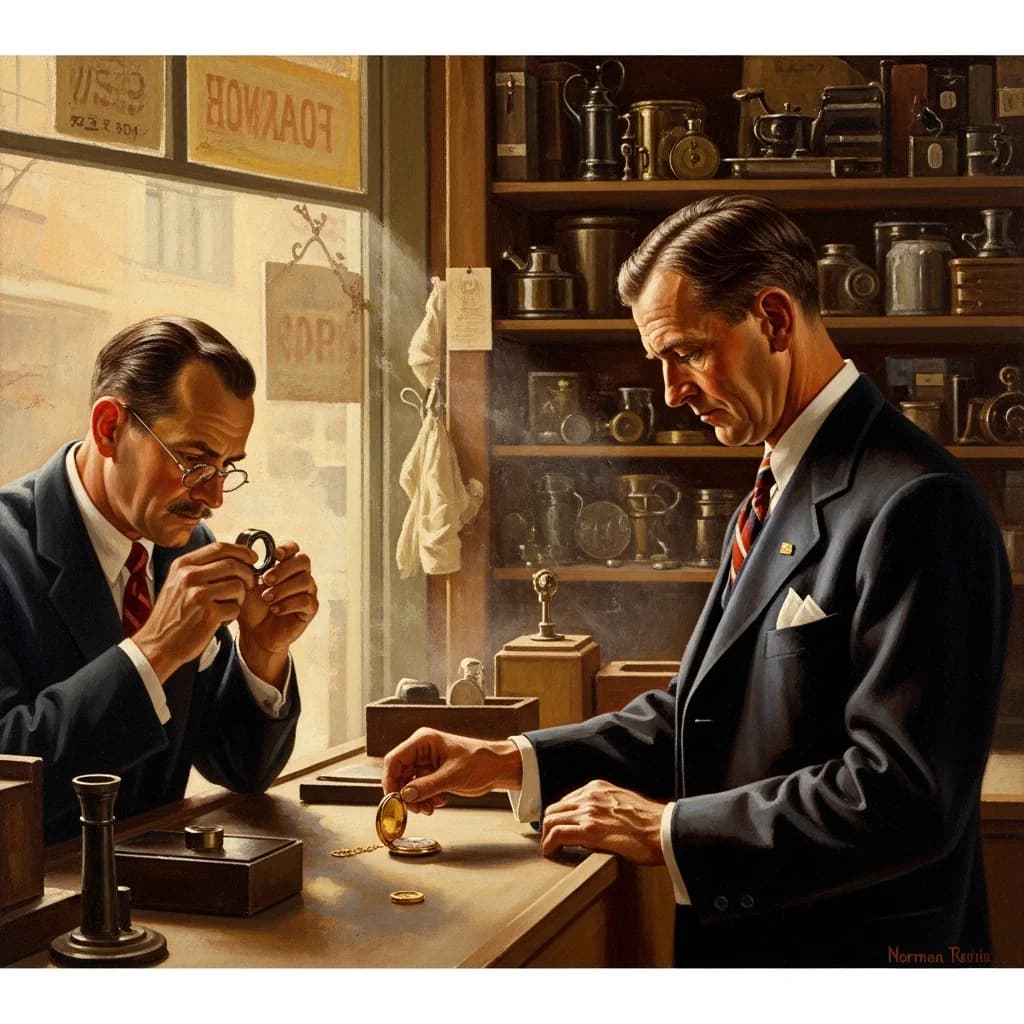
A handful of companies were holding. Altria — formerly Philip Morris, the largest American tobacco company — had declined modestly and was paying a nine percent dividend. Molson Coors was up for the year. Dollar Tree and Dollar General were approaching their 52-week highs. FirstCash, the pawnshop chain, had barely moved from where it started the year. Churchill Downs, owner of the Kentucky Derby, was recovering toward its prior high.
This was not accident and it was not noise. It was a pattern that researchers had been documenting for years, that professional investors quietly built into their defensive allocations, and that behavioral economists had a series of increasingly specific explanations for. The recession portfolio. Vice, discount, and desperation — the categories of human need that are most resistant to the economic cycle.
Nobody puts "overweight sin stocks during economic downturns because people drink and smoke more when they're stressed" in a client presentation. But the strategy is real, and the evidence for it is substantial.
The Academic Case for Sin
The most rigorous single study of sin stock performance is Harrison Hong and Marcin Kacperczyk's 2009 paper "The Price of Sin: The Effects of Social Norms on Markets," published in the Journal of Financial Economics. Hong and Kacperczyk analyzed the returns of alcohol, tobacco, and gaming companies over multiple decades and found that sin stocks earn approximately 2.5 percent abnormal annual returns — outperformance over comparable companies that cannot be explained by risk factors alone.
Their explanation is structural. Many institutional investors — pension funds, university endowments, sovereign wealth funds, insurance company portfolios — face governance constraints or social pressure that prevents them from holding tobacco or gambling stocks. Some have explicit exclusion lists. Some face beneficiary objections. Some are subject to state laws that prohibit sin-stock holdings in public pension portfolios.
This institutional exclusion creates chronic undervaluation. Stocks that cannot be held by a significant fraction of potential buyers trade at a discount to their fundamental value. Investors without such constraints — hedge funds, family offices, individuals — can capture this discount. Over time, the undervaluation premium accrues to those who hold what others will not.
But the undervaluation story is only part of the explanation. The other part is the inelasticity of vice demand.
Why Vice Is Recession-Resistant
Tobacco is the purest example. The core product — cigarettes — has near-perfect price inelasticity in established smokers. Decades of research on tobacco demand consistently find that a 10 percent increase in cigarette prices reduces consumption by approximately 3 to 5 percent, and this effect is concentrated in new or occasional users. Established smokers, particularly those with significant physical dependency, do not materially reduce consumption when their income falls or prices rise. They cut other spending first.
This is the defining property of addiction as an economic variable: it converts demand from elastic to inelastic. The smoker who cannot afford to smoke is not a customer who delays purchase — they are a customer under financial stress who will find a way to purchase, up to and including reducing spending on food, clothing, or utilities. This makes tobacco revenue remarkably stable across the economic cycle. Which makes Altria's stock — at the right valuation — a nearly risk-free income stream.
Beer occupies a different position. Demand for beer at the premium end of the market is pro-cyclical — craft beer consumption rises during expansions and falls during contractions, as it shares shelf space with other discretionary spending choices. But demand at the economy end of the market, and aggregate beer consumption across all price points, is weakly counter-cyclical or acyclical. When disposable income falls, consumers trade down from premium to economy rather than stopping drinking. Molson Coors and Anheuser-Busch benefit from this trading-down effect, which offsets volume declines in their premium products.
Gambling is the most interesting case. Legal gambling demand — casinos, horse racing, state lotteries, sports betting — has a more complex cycle than tobacco or beer because it is internally differentiated. High-stakes gambling is discretionary and pro-cyclical: casino revenue in Las Vegas fell sharply in 2009. But lower-stakes gambling — lottery tickets, video poker terminals, slots — tends to be counter-cyclical or acyclical. And lottery sales, which target a mass market with low price points, reliably increase during economic stress.
The Lipstick Index
The most famous single instance of counter-cyclical vice spending has a name and a person attached to it.
In late 2001, Leonard Lauder — chairman of Estée Lauder — noticed something in his company's sales data as the post-9/11 recession deepened. Lipstick sales were rising. In the middle of an economic contraction, with consumer spending broadly declining, women were buying more lipstick.
Lauder's hypothesis, which he articulated publicly and which has since been known as the "lipstick index" or "lipstick effect," was that consumers in economic downturns substitute small affordable luxuries for the large luxuries they can no longer afford. Unable to replace the car, renovate the kitchen, or take the vacation, the consumer buys the expensive lipstick. The indulgence is still present; it has been scaled to fit the budget.
Subsequent research has partially validated and partially refined this observation. Sarah Hill and colleagues, writing in the Journal of Personality and Social Psychology in 2012, found that economic contraction does predict increased spending on "attractiveness-enhancing" products but that the effect is more specific than Lauder's version suggested — it is strongest in categories that function as mate-attraction signals and weakest in beauty categories that don't serve that social function.
The underlying mechanism they identified: during economic stress, competition for resources intensifies, and people invest more in signals of their own competitive value. The lipstick is not escapism. It is, from the evolutionary psychology perspective, a rational response to increased status competition in a resource-constrained environment.
The broader class of behaviors this points to — the preference for affordable indulgences when expensive aspirations become unreachable — is the behavioral foundation of the recession portfolio. The bottle of decent bourbon instead of the dinner at a nice restaurant. The lottery ticket instead of the investment account contribution. The casino slot machine instead of the vacation. The pawnshop loan instead of the bank credit line.
None of it is virtue. Most of it is expensive in one way or another. But it is predictable, consistent, and informative.
What Lottery Sales Actually Measure
State lottery data is among the cleanest economic signals available in the informal economy, because unlike most informal-economy data, it is public. Every state lottery reports revenue figures. The pattern those figures reveal is not subtle.
During the 2007–2009 recession, lottery sales in most states proved dramatically more resilient than virtually any other category of consumer discretionary spending. They did not merely hold — in many states and during specific periods, they rose. The same phenomenon appeared during the early 1990s recession and, in a more complex form, during the COVID-19 period (where lottery sales actually surged, in part because stimulus payments gave people cash and closed venues gave them nothing to do with it).
The economic explanation for counter-cyclical lottery participation has two components. The rational component, which we have already described: when formal-economy routes to wealth creation are blocked, informal-economy routes (the lottery) gain relative attractiveness. The psychological component: economic stress creates a need for hope and a sense of agency that lottery tickets efficiently supply. Buying a ticket is an act of participation in the possibility of transformation. The act itself provides a psychological return even when the ticket loses.
Researchers studying lottery sales following specific economic shocks — plant closings, regional recessions, natural disasters — consistently find measurable increases within one to two quarters. The lottery line responds faster than the unemployment rate, because people don't need to file a claim or wait for a survey to buy a ticket. They respond immediately to their perception of their own economic prospects.
The lottery line is a sentiment indicator. It measures how many people have concluded that their formal-economy prospects are not going to improve on their own.
Dollar Stores and the Trading-Down Effect
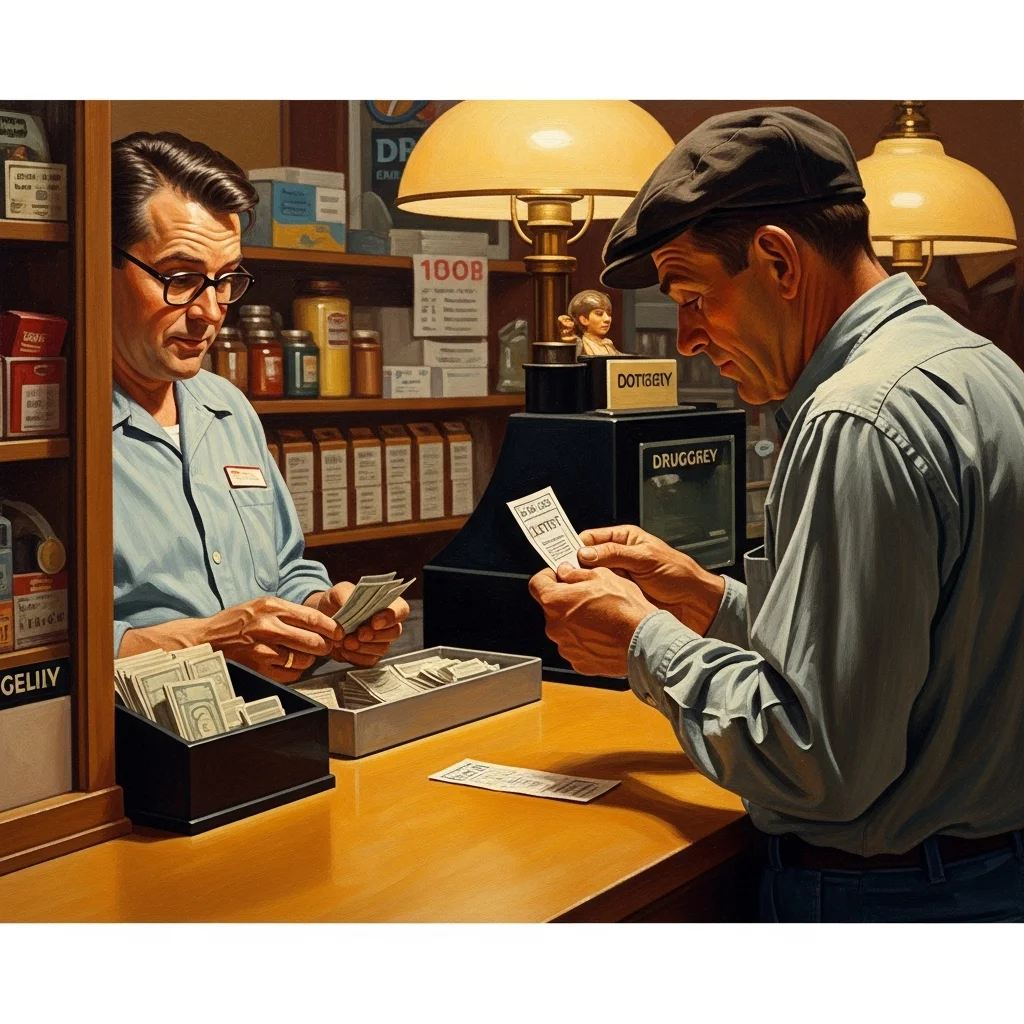
The dollar store industry is the legal vice economy's clearest institutional beneficiary of the trading-down effect.
Dollar Tree and Dollar General are not, technically, sin stocks. They sell household goods, food, and cleaning supplies. But they occupy the same counter-cyclical ecological niche: they benefit when consumers reduce spending and trade down to cheaper alternatives. During every significant economic contraction since 1990, dollar store companies have outperformed the broader retail sector by substantial margins.
The mechanism is straightforward. A household that previously shopped at a grocery chain switches to the dollar store for non-perishables. A family that previously bought brand-name cleaning products switches to store brands and dollar-store equivalents. Each individual substitution is small; the aggregate effect across millions of households shifts significant revenue from full-price retail to discount retail.
Dollar store stock performance during recessions is, in a meaningful sense, a proxy for the scale of consumer trading-down. Strong dollar store revenue means a lot of households have concluded that the brand-name product at the grocery chain is no longer within their budget. It is a measure of how many people have changed their consumption behavior in response to tighter finances.
This trading-down effect runs across the legal vice spectrum. Beer drinkers trade down from craft to economy. Casino gamblers shift from table games to slots or from Las Vegas trips to local casinos. Cigarette smokers shift from premium to value brands or to loose tobacco. Each substitution preserves the consumption pattern while reducing the expenditure — and each shift is a measurable signal of economic pressure.
The Portfolio Nobody Advertises
The practical investment application of all this is uncomfortable to discuss explicitly because it requires acknowledging that human suffering has financial structure. The recession is bad for most people and good for some businesses. The businesses that benefit from it are, disproportionately, the ones whose products people turn to when they're desperate: cheap credit (payday lenders, pawnshops), cheap escape (lottery tickets, economy beer, casino slots), and cheap basics (dollar stores).
Institutional investors with ESG mandates and governance constraints cannot hold these companies in size. Some refuse on principle. Some are prohibited by mandate. This chronic exclusion creates the undervaluation premium that Hong and Kacperczyk documented — the reason sin stocks have historically earned abnormal returns.
Individual investors and funds without such constraints can build a position in sin stocks, pawnshop chains, and dollar stores that functions as a recession hedge. It is not a short on the economy; it is a long on human behavior in difficult times. History suggests that behavior is consistent.
The pitch deck version of this strategy exists. It just doesn't say "sin portfolio." It says something like "defensive consumer staples with counter-cyclical demand characteristics." Which is technically accurate. It is also a description of companies that make their money from people who are economically struggling.
Both descriptions are true. The portfolio works because the second one is.
The Recession as Opportunity for the Alert Lender
For commercial lenders operating in the small-business market, the sin-stock and vice-spending pattern has a specific implication. The businesses that serve counter-cyclical demand — discount retail, basic-goods grocery, payday lending, pawnbroking, gambling — are often the strongest credit risks during a downturn, precisely because their revenues are rising while the broader market contracts.
A lender who recognizes that the pawnshop chain is a safer credit in a deteriorating market than the luxury retail tenant, or that the dollar-store franchisee is a better short-term loan candidate than the upscale restaurant, is reading the same signal that the informal economy has been broadcasting. The vice economy's counter-cyclical properties are not just a stock-picking framework; they are a credit assessment framework.
The data has been telling this story for decades. The recession portfolio outperforms. The vice economy holds. The pawnshop line gets longer before the unemployment rate rises. The lottery sales spike before the consumer confidence index falls. The floor of the economy is more visible in these numbers than in the quarterly reports.
FundScout works with lenders across the commercial lending spectrum to match vetted borrowers with appropriate capital. This is the third in our series on the vice economy as financial signal.
Sources
- Harrison Hong and Marcin Kacperczyk, "The Price of Sin: The Effects of Social Norms on Markets", Journal of Financial Economics, Vol. 93, No. 1 (July 2009), pp. 15–36 — approximately 2.5% abnormal annual returns for sin stocks; institutional exclusion creating chronic undervaluation
- Sarah E. Hill, Christopher D. Rodeheffer, Vladas Griskevicius, Kristina Durante, and Austin E. White, "Boosting Beauty in an Economic Decline: Mating, Spending, and the Lipstick Effect", Journal of Personality and Social Psychology, Vol. 103, No. 2 (2012), pp. 275–291 — empirical validation and evolutionary psychology explanation of the lipstick effect
- Leonard Lauder, "The Lipstick Index" — articulated during the 2001 recession; cited in The Economist, December 22, 2001
- Tobacco demand elasticity (10% price increase → 3–5% consumption decrease in established smokers): Frank J. Chaloupka and Kenneth E. Warner, "The Economics of Smoking", in Handbook of Health Economics, Vol. 1B (Elsevier, 2000)
- Emily Haisley, Romel Mostafa, and George Loewenstein, "Subjective Relative Income and Lottery Ticket Purchases", Journal of Behavioral Decision Making, Vol. 21, No. 3 (2008), pp. 283–295 — lottery participation rises as perceived relative income falls
- State lottery sales during 2007–2009 recession: North American Association of State and Provincial Lotteries (NASPL), annual sales data — consistent counter-cyclical performance documented across states
- FirstCash Financial Services stock performance 2007–2009: NASDAQ financial data; minimal decline while broader indices fell 40–50%
- Churchill Downs stock performance 2009: NASDAQ financial data