

Sales is one of the last career paths in America where a motivated person with no degree, no connections, and no capital can still walk in the door and build a six-figure income inside of two or three years. The barriers are lower than almost any other high-income field. The ceiling is higher than most people realize.
The question isn't whether it's possible — it is. The question is which doors are actually open, which ones pay what they claim, and which ones will grind you down before you get there.
This is a survey of nine sales careers that are genuinely accessible to anyone reasonably smart and highly motivated. For each one: what it is, how to break in, what you can realistically expect to earn, and what the experience actually costs you. Some of these are old. Some didn't exist fifteen years ago. All of them are hiring right now.
Car Sales

The door in: Walk into any dealership with a clean background, some presentability, and a pulse. That is almost literally the bar. Car sales has the lowest formal barrier to entry of any commission-based sales job that can realistically pay six figures.
What you'll actually earn: Average car salesperson income runs $70,000–$100,000 annually, with top performers at high-volume or luxury dealerships clearing $150,000+. Commission is typically 20–30% of gross profit per vehicle, which translates to roughly $300–$600 per new car. The range is wide because dealerships vary enormously — a high-volume Toyota store in a suburb is a completely different economic environment than a Chevy lot in a slow market.
Year one reality: Expect $40,000–$60,000 while you learn the product, the process, and the rhythm of the floor. Income grows quickly once you build a referral base.
The honest part: Car sales has some of the highest turnover of any sales job. Long hours (50–60 hours a week is standard), weekend requirements, dealership politics, and the grind of floor traffic that doesn't buy make the first year genuinely hard. The reps who stick around two years and build a book of referral customers are the ones who make the real money. The ones who can't get past the attrition quit by month six and tell everyone car sales is a bad job.
Burnout watch: High. The floor culture at many dealerships rewards volume over quality and runs on pressure. Not all dealerships — but enough that you should evaluate the culture before you sign on.
Real Estate

The door in: A real estate license. The exam is state-by-state but typically involves 60–150 hours of coursework, a state exam, and an application fee — total cost usually $500–$1,500 and a few weeks to a few months. No degree required anywhere in the country.
What you'll actually earn: This one has the widest income range of any job on this list. The average working agent earns around $70,000–$90,000. Top producers in competitive markets — especially commercial, luxury residential, or investment property — clear $200,000–$500,000+. But: 88% of first-year agents in many states earn under $25,000. The first year is brutal for most people.
Year one reality: If you don't have a sphere of influence (family, friends, past colleagues who might buy or sell), expect to spend the first 12–18 months grinding prospecting and building pipeline with almost no income. The agents who survive that period see their income roughly triple in year two. The vast majority don't survive it.
The honest part: Real estate is not a job, it's a business. You are responsible for your own leads, your own marketing, your own schedule, and your own income from day one. The brokerage provides liability coverage and a brand. Everything else is yours. If you have the discipline and the network to build a pipeline, there is almost no ceiling. If you need structure, accountability, or a guaranteed paycheck, this will break you fast.
What's changed: The NAR commission settlement in 2024 changed how buyer's agent commissions are disclosed and negotiated — the industry is adjusting, and some buyers' agents are seeing compressed commissions as a result. Worth understanding before you choose a specialty.
Insurance Sales

The door in: A state insurance license. Like real estate, this requires passing a state exam and completing pre-licensing coursework — typically 20–40 hours for property/casualty, 40+ hours for life and health. No degree required. Many carriers will hire unlicensed candidates and pay for your licensing.
What you'll actually earn: The range is enormous depending on whether you're a captive agent (working exclusively for one carrier like State Farm or Allstate) or an independent broker (representing multiple carriers). Captive agents at major carriers average $60,000–$100,000. Independent agency owners average over $100,000, with established independents often earning $150,000–$250,000. State Farm agency owners specifically average around $250,000 in annual compensation.
The path: Most people start in a support or customer service role at a captive agency, get licensed on the agency's dime, then move into sales. The independent agency path takes longer to build but offers substantially higher long-term income and the ability to build equity in a book of business you can eventually sell.
The honest part: Insurance sales is a long-game career. The first 2–3 years involve a lot of cold calling, a lot of rejection, and income that doesn't feel commensurate with the effort. The back end is residuals — renewals that keep paying year after year on the policies you've already written. The people who build large books of business and stick around have income that compounds in a way no other sales job on this list matches.
What's changed: Personal lines insurance (auto, home) has gotten harder to sell as rates have spiked and carrier market exits have shrunk options in some states. Commercial lines and life insurance are where the growth is, and both command higher commissions.
Roofing and Restoration Sales

The door in: Nothing. No license, no degree, no prior experience in most cases. Many roofing companies will hire any motivated person and train them on the job. Some will put you in a truck and on a roof within a week.
What you'll actually earn: Average roofing sales income is around $54,000–$80,000. Top producers — particularly in the storm restoration market — can make $100,000–$150,000+ in a good storm season. Commission structures vary, but the most common is a split of the gross profit after company overhead, often yielding 10–20% of the total job value on insurance-funded projects.
The storm chasing sub-world: There is an entire sector of roofing sales built around following hail and wind storm events — reps deploy to affected areas, canvass neighborhoods door-to-door, identify damage, help homeowners file insurance claims, and collect a commission on the repair contract. It's intensive, transient, and lucrative when the storms cooperate. It also involves sleeping in motels and eating fast food for weeks at a stretch, which is not everyone's idea of a good time.
The honest part: This is physical, outdoor, door-to-door work. The income is real but the lifestyle is demanding. The top earners in storm restoration treat it like a seasonal high-intensity sprint and bank the income during the busy months. If you need steady year-round income and a predictable schedule, this is not it. If you're young, mobile, and motivated by a direct connection between effort and income, few jobs pay as fast for the skill level required.
Burnout watch: High in door-to-door and storm models. Lower in referral-based residential or commercial roofing with an established company.
Commercial Finance / MCA Broker

The door in: No license required in most states. No degree. You can start as an independent ISO (Independent Sales Organization) or join an established brokerage. The barrier is almost purely knowledge and hustle — you need to understand the products well enough to place deals, and you need to find business owners who need capital.
What you'll actually earn: MCA and commercial finance broker income varies dramatically. New reps working as ISOs typically earn $30,000–$70,000 in their first year. Experienced brokers who've built a deal flow earn $100,000–$200,000+. Commission on individual deals is typically 5–10% of the funded amount, paid at closing. A single MCA deal on a $100,000 advance generates $5,000–$10,000 in commission. Close five a month and the math speaks for itself.
The broader landscape: MCA is the most accessible entry point, but commercial finance brokering covers a much wider range of products — SBA loans, equipment financing, invoice factoring, term loans, lines of credit. The brokers who graduate from MCA-only into full-service commercial finance see meaningfully higher income and deal quality, because they can match borrowers to the right product instead of defaulting to the highest-commission option.
The honest part: This job has real ethical complexity. MCA in particular involves products with high effective costs, and the incentive structure rewards volume over fit. The brokers who build sustainable practices are the ones who develop genuine product expertise and treat client outcomes as a long-term reputation asset. The ones who chase commissions without regard for borrower fit burn through leads, generate complaints, and eventually find that the regulatory environment is tightening around the practices that made it easy money.
See also: How to Sell MCAs and Still Sleep at Night
What's changed: State disclosure laws in California, New York, Virginia, and others now require commercial finance providers to disclose APR equivalents. The regulatory floor is rising, which is squeezing the bottom of the market while creating opportunity for brokers who operate with transparency.
SaaS and Tech Sales (SDR → Account Executive)

The door in: This is the newest major pipeline on this list, and it barely existed before 2010. The path is: start as an SDR (Sales Development Representative) or BDR (Business Development Representative), build a track record of booking meetings, and graduate to Account Executive. Companies hire SDRs with no degree and no prior sales experience — they care about coachability, communication skills, and work ethic.
What you'll actually earn:
- SDR/BDR: Base salary of $45,000–$65,000 with on-target earnings (OTE) of $70,000–$100,000 in most markets
- Account Executive (mid-market): Base of $60,000–$80,000 with OTE of $120,000–$180,000
- Enterprise AE: Base of $80,000–$120,000 with OTE of $180,000–$300,000+
These are not outlier numbers — they are the published comp bands at mid-sized SaaS companies. The top of the market at late-stage or public SaaS companies is significantly higher.
The honest part: SaaS sales is the most legible meritocracy on this list. The metrics are transparent (calls made, demos booked, pipeline generated, revenue closed), the comp plans are written down, and the career path from SDR to AE to Senior AE to Manager is well-defined. It's also genuinely competitive. Good SDR programs are structured training grounds that produce AEs in 12–18 months. Bad ones are phone farms with impossible quotas and 100% annual turnover. Research the company before you sign.
Burnout watch: SDR roles have high burnout. The outbound grind — cold calls, cold emails, constant rejection, quota pressure — is genuinely demanding. AE roles are more varied and sustainable once you get there. The step from SDR to AE is where most people either commit to the career or exit.
What's changed: AI has automated the lowest-skill portions of SDR work — lead scraping, email sequencing, initial outreach. The SDRs who will survive are the ones who can do the things AI can't: build genuine rapport in a cold call, read a prospect's real objection, and adapt in real time. The job is harder to fake than it was five years ago, which is actually good for skilled people.
Solar Sales
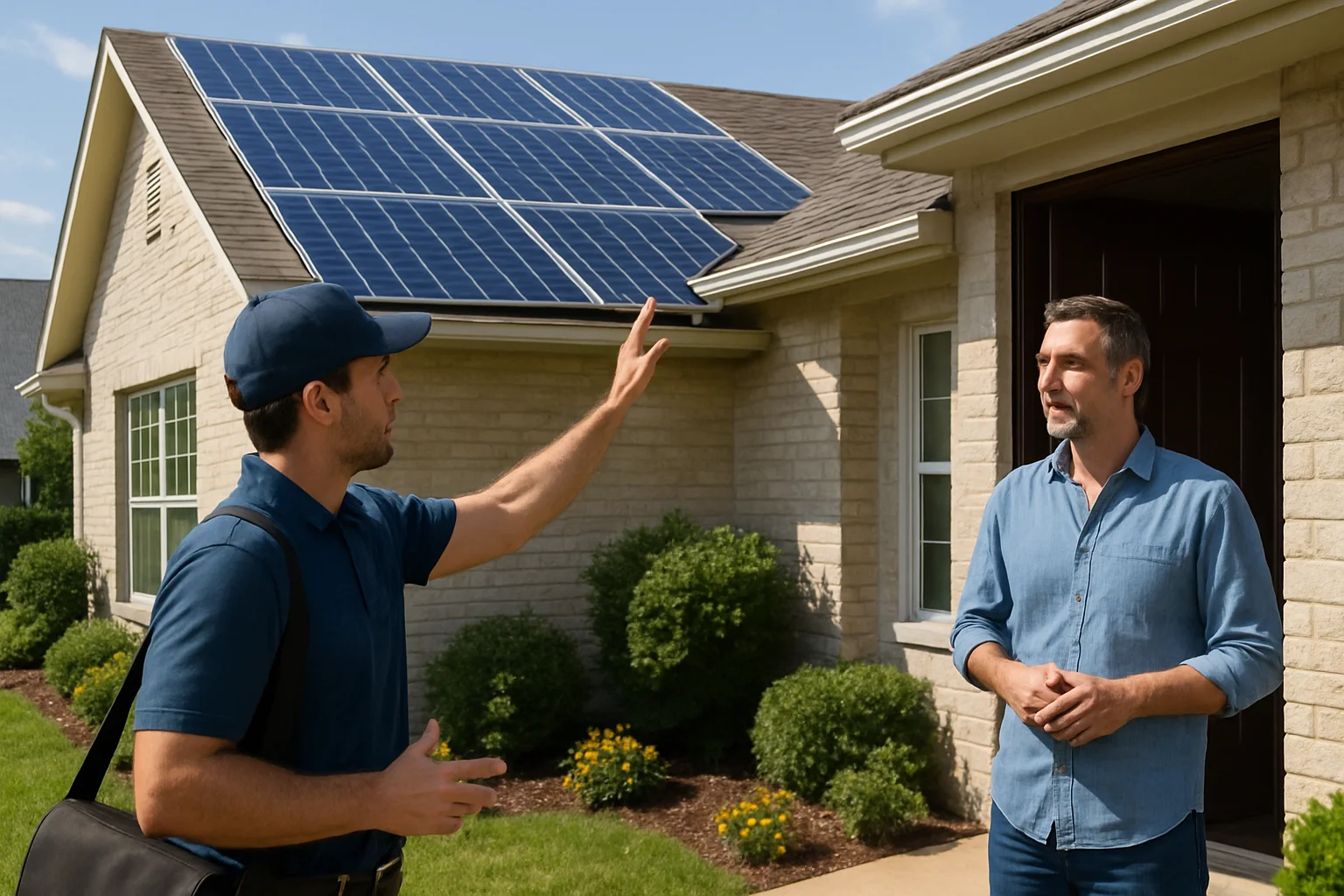
The door in: No license, no degree, minimal experience required. Solar companies — particularly national door-to-door operations like Sunrun, Momentum, and dozens of regional players — hire aggressively and train quickly. Most will put you in the field within two weeks.
What you'll actually earn: Published averages range widely, from $77,000 to $145,000 depending on the source. The reality for door-to-door solar reps is more bimodal: the top 20–30% make genuinely excellent money ($120,000–$200,000+), and a large portion of the rest churn out before they close enough deals to get there. Commission per sale at large companies can run $5,000–$10,000 per installation, which means one good week can change your monthly income dramatically.
The honest part: Solar door-to-door is intense. It involves working 10–14 hour days canvassing neighborhoods, handling aggressive objections at the door, and operating in a market that has become increasingly saturated in many regions. Review complaints about specific companies carefully before joining — some have reputations for delayed commission payments, retroactive pay cuts, and high-pressure internal cultures.
Burnout watch: Very high, specifically in the door-to-door model. The companies that structure their sales force around inside sales or referral networks have notably better retention. If you're evaluating a solar sales opportunity, ask specifically about the sales model before you decide.
What's changed: Solar has gone from a niche product to a mainstream purchase in most U.S. markets over the past decade. The IRA (Inflation Reduction Act) extended federal tax credits through 2032, giving the industry a long runway. Market saturation in some areas has compressed margins, but new markets — particularly commercial and community solar — are opening as the technology matures.
Freight Broker

The door in: A federal freight broker license (FMCSA authority), which requires a $75,000 surety bond or trust fund, a background check, and a processing fee — total out-of-pocket around $1,000–$2,000. No degree required. Many people enter the industry by starting as a freight agent at an existing brokerage, where the brokerage holds the license and you work on a commission split.
What you'll actually earn: Entry-level freight brokers earn $50,000–$75,000 while building a carrier and shipper network. Experienced brokers with established books earn $100,000–$175,000+. Commission is typically 15–18% of gross margin on each shipment, which means volume and deal size both matter. The freight market is cyclical — the years when capacity is tight and spot rates are high can be very lucrative; down cycles compress margins.
The honest part: Freight brokering is a relationship and hustle business. The first year involves cold-calling shippers, building carrier relationships, and earning trust in an industry where everyone has been burned by an unreliable broker. The people who stick it out and build a real book of shippers and carriers create something that compounds — shippers come back, carriers answer your calls, and income grows without proportionally growing your hours.
Burnout watch: Moderate. The job is demanding in year one while you're prospecting constantly, but more sustainable once you have a real book. The biggest risk is market cycles — a freight recession (as seen in 2023–2024) can compress income sharply for brokers who haven't diversified their shipper base.
What's changed: The load board revolution (DAT, Truckstop.io) and freight tech platforms (Uber Freight, Convoy, Loadsmart) have automated the transactional middle of the freight market. The brokers who thrive are the ones handling complex, relationship-dependent freight — dedicated lanes, specialized equipment, time-sensitive loads — that can't be reduced to an algorithm.
Staffing and Recruiting Sales

The door in: No license, no degree required at most firms. Staffing companies routinely hire entry-level recruiters and train them from scratch. You're selling two ways simultaneously: to client companies who need to hire, and to candidates who need jobs. The dual sales cycle is what makes it harder than it looks.
What you'll actually earn: Entry-level recruiters start at $40,000–$55,000 base, with commission bringing OTE to $60,000–$80,000 in year one. Experienced staffing sales professionals — particularly those covering specialized verticals like tech, healthcare, or finance — earn $80,000–$150,000+. The commission structure is typically 15–25% of a placed candidate's first-year salary, paid by the employer. Top performers and agency owners can hit $250,000+.
The path: Most people start as a 360 recruiter (handling both sales and recruiting), then specialize into either business development (selling to client companies) or delivery (working candidates). The BD side is where the big commission checks come from. Some people also build their own independent recruiting practice once they have a specialty and a network.
The honest part: Staffing is a grind with a learning curve that most people don't anticipate. Deals fall through constantly — a candidate accepts a counter-offer the day before their start date, a client freezes hiring mid-search, a hiring manager you've been working with for months gets laid off. The emotional resilience required is real. The people who stick around build domain expertise in an industry vertical and become genuinely hard to replace.
Burnout watch: High in the first 1–2 years, particularly in high-volume temp staffing. Lower in specialized permanent placement once you have a real candidate and client network.
What the Best Opportunities Have in Common
Looking across all nine:
Residuals beat one-time commissions over time. Insurance and freight brokering have strong residual and recurring revenue components. Real estate referrals compound. SaaS reps who move into account management earn expansion revenue. The jobs that pay best in years three to five are the ones where your prior work keeps paying you.
Licenses are moats, not barriers. Real estate and insurance both require licenses that take weeks, not years, to obtain. Most serious competitors in those fields don't bother, which means the people who do hold them get access to a more defensible position.
Relationship books are assets. In every role on this list, the person who builds a genuine book of client relationships has created something with real value — something that's hard to take away and, in some cases, literally sellable. That's rare in a job. It's one of the defining structural advantages of a sales career.
Burnout is real and industry-specific. Sales overall has among the highest burnout rates of any profession — Gartner research suggests nearly 90% of salespeople experience burnout. The door-to-door roles (solar, roofing) and the SDR grind carry the highest acute burnout risk. Insurance and freight brokering tend to be more sustainable once a real book is built. Know what you're signing up for before you commit.
The One Thing None of Them Will Tell You
Every sales career on this list will pay a motivated, persistent person more than their current job. All of them will pay an unmotivated person nothing.
The income figures above are real. So are the attrition figures. The difference between the person who makes $150,000 in year three and the person who washes out in year one is not talent, credentials, or luck. It's the willingness to show up every day and do the uncomfortable parts — the cold calls, the follow-ups, the conversations after a long string of rejections — long enough to build the momentum that makes the work feel like something other than a grind.
That's available to anyone who decides to do it. The question is whether you'll decide.
If you're a business owner who's been on the receiving end of this process, FundScout is built around a different model — where lenders come to you through a system that's designed to protect your information and eliminate the sales pressure that dominates most lending relationships.
Sources
- Real estate agent first-year income ("88% of first-year agents earn under $25,000"): National Association of Realtors, Member Profile annual survey — nar.realtor
- NAR commission settlement (2024): Sitzer/Burnett v. National Association of Realtors, Case 4:19-cv-00332 (W.D. Mo.); settlement of approximately $418 million; new buyer representation rules effective August 17, 2024 — nar.realtor/the-facts
- Sales burnout (~90% of salespeople experience burnout): Gartner, Sales Talent Research (2022) — gartner.com; see also Gartner, The Future of Sales 2025 report